If you have started researching facelift surgery, you have probably encountered two terms repeatedly: deep plane facelift and SMAS facelift. Social media, surgeon websites, and online discussions often present them as competing choices, with each technique promoted as more advanced, more natural, or longer-lasting. That framing makes the decision sound simple: choose the “best” technique, and you should get the best result.
Facelift surgery is not quite that simple.
Deep plane and High SMAS facelifts are both established approaches to facial rejuvenation. Both can improve jowls, restore jawline definition, elevate descended facial tissues, and create a more refreshed appearance. The most appropriate approach depends on your anatomy, pattern of aging, skin quality, neck anatomy, previous treatments, and goals. Just as importantly, the result depends on how thoughtfully and skillfully the operation is planned and performed.
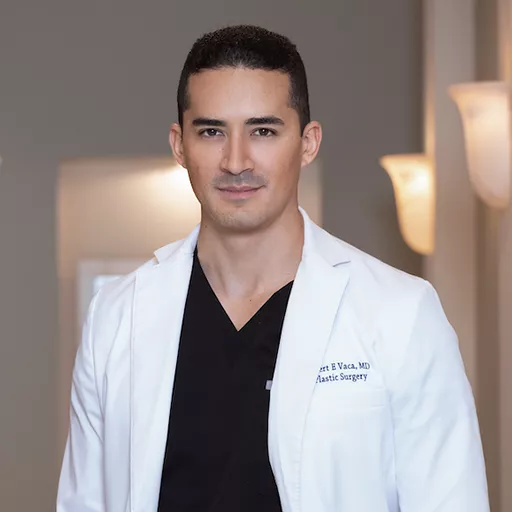
At the Boca Raton practice of Dr. Fagien and Dr. Vaca, board-certified plastic surgeon Dr. Elbert Vaca does not apply one standardized operation to every face. He frequently performs a variation of an Extended Dual Plane High SMAS facelift with medial platysmaplasty, customizing the surgical plan for each patient. His priority is not selecting the trendiest label. It is restoring youthful structure and balance while preserving the features, expressions, and character that make each patient unique.
Key Takeaways
- Deep plane and High SMAS facelifts both reposition tissue beneath the skin rather than relying on skin tension alone.
- “SMAS facelift” describes a broad family of operations, not one standardized technique.
- Available evidence does not establish one technique as universally superior for every patient.
- In a recent 2025 review article in Plastic and Reconstructive Surgery, “Deep Plane” facelift techniques were associated with a higher incidence of facial nerve injury.
- Your anatomy, your surgeon’s experience and aesthetic judgment, surgical execution, and postoperative care may matter more than the procedure’s name.
What Is the SMAS?
SMAS stands for the superficial musculoaponeurotic system. Despite its complicated name, the concept is straightforward: the SMAS is a supportive layer of fibrous and muscular tissue beneath the skin and facial fat. It is continuous with other structures of the face and neck, including the platysma, the thin muscle that extends across the neck and lower face.
The SMAS matters because facial aging is not limited to loose skin. Over time, deeper facial tissues descend, facial fat changes position or diminishes, retaining ligaments and connective tissues weaken, and the neck loses definition. These changes contribute to sagging cheeks, jowls, deeper folds around the mouth, vertical neck bands, and a less defined jawline.
Earlier skin-only facelifts primarily pulled and removed excess skin. Placing too much tension on the skin can contribute to conspicuous scars and an unnatural, tight, or windswept appearance. Modern facelift surgery instead focuses on restoring deeper support, allowing the skin to be redraped more gently over the repositioned contours.
Both deep plane and High SMAS facelift techniques grew from this more anatomically informed understanding of facial aging.
What Is a SMAS Facelift?
A SMAS facelift lifts, folds, tightens, removes, or repositions part of the SMAS layer to improve facial contours. However, the term does not refer to one exact operation. It includes several techniques that manipulate the SMAS in different ways and to different degrees.
Common SMAS-based approaches include:
- SMAS plication: The SMAS is folded and secured with sutures.
- SMASectomy: A selected strip of SMAS is removed before the remaining tissue is tightened and secured.
- High SMAS facelift: The surgeon elevates and repositions the SMAS at a higher level to influence the cheek, lower face, and jawline.
- Extended SMAS facelift: The surgeon mobilizes a broader area of deeper tissue to address more extensive facial descent.
- Dual plane facelift: The skin and SMAS are elevated in separate planes, allowing each layer to be adjusted according to the patient’s anatomy.
This is why comparing a generic “SMAS facelift” with a deep plane facelift can be misleading. SMAS surgery represents an entire family of techniques. A limited SMAS plication is not the same operation as an Extended Dual Plane High SMAS facelift, even though both may be described as SMAS facelifts.
The versatility of SMAS techniques allows an experienced surgeon to adjust the direction, extent, and strength of the lift. When performed well, a High SMAS facelift can restore cheek, jawline, and lower-face contours without relying on excessive skin tension.
What Is a Deep Plane Facelift?
A deep plane facelift involves lifting the SMAS in selected portions of the face. The surgeon releases certain retaining ligaments that tether the mobile facial tissues to deeper structures. This release allows the skin, SMAS, and overlying facial fat to be repositioned together as a composite unit.
“Deep plane” is not a completely uniform label. Surgeons may differ in where they enter the plane, which retaining ligaments they release, how far the dissection extends, the direction in which they reposition tissues, and how they address the face and neck together.
This does not mean the terminology is meaningless. The surgical plane and method of tissue release matter. It simply means that the words “deep plane” do not describe every detail of the operation or guarantee a particular result.
Deep Plane vs. High SMAS Facelift: What Is the Difference?
The central difference is where the surgeon dissects and how the facial tissues are mobilized.
In a deep plane facelift, the surgeon works beneath the SMAS in key areas and releases selected retaining ligaments, allowing the skin and deeper tissues to move together as a composite unit. In a High SMAS facelift, the skin is elevated separately before the SMAS is released, mobilized and repositioned at a higher level to address the cheek, lower face, and jawline.
That distinction matters technically, but modern facelift methods often overlap. A High SMAS operation may incorporate extensive tissue release and mobilization, while a deep plane procedure may vary substantially from one surgeon to another. Advanced facial rejuvenation is often better understood as a spectrum of anatomical strategies than as two entirely unrelated operations.
The practical questions are therefore more useful than the label alone:
- Which areas of the face will be released and repositioned?
- How will the operation address the cheeks, jowls, jawline, and neck?
- Will the plan restore lost volume as well as lift descended tissue?
- How will the surgeon avoid excessive tension on the skin?
- Where will the scars be concealed?
- How will the procedure preserve the hairline, ears, expressions, and natural facial proportions?
- Why is this particular approach appropriate for your anatomy?
Is a Deep Plane Facelift Better Than a High SMAS Facelift?
No single facelift technique is best for every patient – or every surgeon.
Published reviews comparing deep plane and SMAS-based techniques report high satisfaction and meaningful rejuvenation with both approaches. However, direct comparisons are difficult because surgical definitions, patient populations, follow-up periods, outcome measures, and surgeon experience vary. Much of the available evidence is observational rather than based on randomized, head-to-head trials.
That makes sweeping claims difficult to support. A deep plane facelift is not automatically more natural or longer-lasting. Likewise, a thoughtfully designed High SMAS facelift is not inherently better. Either approach can produce elegant, natural-looking results when selected appropriately and performed meticulously. Either can also produce disappointing results when the plan does not match the anatomy or the operation is poorly executed.
Patients should therefore be cautious about marketing that presents one technique as a universal answer. A facelift is not a branded device performed identically in every office. It is a complex operation shaped by the surgeon’s training, anatomical understanding, judgment, aesthetic sensibility, and technical execution.
Why Dr. Vaca Frequently Uses an Extended Dual Plane High SMAS Approach
Dr. Vaca frequently performs a variation of the Extended Dual Plane High SMAS facelift combined with a medial platysmaplasty. This advanced approach allows him to reposition the deeper support structures of the face while minimizing tension on the skin.
The “High SMAS” component refers to elevating the supportive layer at a higher level, helping address the cheek as well as the lower face and jawline. “Dual plane” means that the skin and deeper layer are managed in separate but coordinated planes. “Extended” describes broader mobilization of the tissue when the anatomy requires it.
A distinct advantage of a “Dual Plane” technique is that the skin and SMAS can be repositioned along partially independent vectors and with different degrees of tension. The SMAS, or deeper supporting layer, can be elevated in a more vertical direction to improve jowling and descended facial tissues, while the skin is gently redraped in a more lateral direction with minimal tension.
This separation allows the surgeon to avoid unnecessarily shifting the thinner neck skin vertically onto the lower face. It may also reduce bunching or pleating of the skin – sometimes referred to as “dog ears” – along the temple and other transition points. With a deep plane technique, the skin and deeper tissues are repositioned together as a composite unit, which provides less independence in adjusting their respective vectors.
This flexibility is valuable because facial aging is rarely identical from one person to the next. One patient may have substantial jowling but relatively good cheek volume. Another may have cheek descent, hollow temples, and deeper folds around the mouth. A third may be most concerned about loose neck skin, fullness beneath the chin, and visible platysmal bands.
Dr. Vaca adapts the operation to those differences rather than making the patient fit a predetermined technique. The goal is to restore structure, proportion, and natural transitions – not simply to pull the face tighter.
The Neck Requires Its Own Surgical Plan
Facelift terminology often focuses on the cheeks and SMAS, but the neck can be equally important to the final result. The face and neck age together. Jowls, loose neck skin, fullness beneath the chin, diminished jawline definition, and vertical platysmal bands often develop as part of the same process.
For many patients, Dr. Vaca combines the facial lift with a medial platysmaplasty. Through a carefully concealed incision beneath the chin, the platysma can be tightened and repositioned when appropriate. This may reduce neck bands, refine the area beneath the chin, strengthen jawline definition, and restore a clearer cervicomental angle – the transition between the chin and neck.
Not every patient requires the same neck procedure. Most benefit from platysma management, while others have excess fat, loose skin, prominent submandibular glands, limited chin projection, or a combination of concerns. Focusing only on whether the facelift is called “deep plane” or “High SMAS” can distract from these equally important anatomical details.
Why Volume Matters
Facial aging involves both descent and deflation. Tissues move downward, but volume is also lost in areas such as the cheeks, temples, under-eye region, lips, and the area around the mouth. A facelift can restore position, but lifting alone may not fully recreate soft, youthful contours.
For this reason, Dr. Vaca incorporates facial fat grafting into nearly all of his facelift procedures. Fat is carefully placed in selected areas to replenish volume and improve facial balance. The goal is not to make the face look full or overfilled, but to restore volume where aging has created hollowing or disrupted natural proportions.
Depending on the patient, a balanced plan may also include eyelid surgery, a brow lift, lip lift, chin augmentation, buccal fat reduction, or skin resurfacing. These are not routine additions for everyone; they are considered only when another area of aging would otherwise limit the harmony of the overall result.
The Surgeon’s Judgment Matters More Than a Buzzword
Technique matters. It determines which tissues are released, how they are repositioned, where tension is placed, and which areas can be improved. But technique is only one part of a successful facelift.
The surgeon must analyze the entire face and neck, recognize asymmetry, understand the changing relationships among skin, fat, muscle, ligaments, and bone, and select an appropriate correction. During surgery, the surgeon must protect important nerves and blood vessels, control bleeding, preserve healthy tissue, position incisions carefully, and distribute tension appropriately. Artistic judgment is equally important because technically lifting tissue does not automatically create attractive proportions.
Small decisions can have a large visual impact. The direction of lift influences the cheek and jawline. Incision design affects the hairline and scar visibility. Careful earlobe positioning helps avoid a pulled or “pixie ear” appearance. Volume restoration can make a result look soft and youthful rather than tight or hollow. Neck contouring must flow naturally into the jawline and lower face.
These details cannot be summarized by a single surgical label. They reflect the surgeon’s experience, precision, restraint, and ability to adapt the plan in real time.
How to Choose a Facelift Surgeon
Instead of asking only, “Do you perform deep plane facelifts?” consider questions that reveal how the surgeon evaluates, plans, and performs the operation:
- Are you certified by the American Board of Plastic Surgery?
- How frequently do you perform facial rejuvenation surgery?
- Which facelift approaches do you use, and why?
- What do you see in my anatomy and pattern of aging?
- Which areas would my surgical plan address?
- How would you treat my neck, jawline, and volume loss?
- Where would my incisions be placed?
- How do you minimize tension on the skin and earlobes?
- Would you recommend fat grafting or another complementary procedure?
- Can I see before-and-after results from patients with concerns similar to mine?
- What should I realistically expect during recovery?
- How are questions or concerns handled after surgery?
A thoughtful surgeon should be able to explain the recommended approach in clear, understandable terms. The explanation should connect the operation to your anatomy rather than relying on a fashionable procedure name.
A Facelift Should Be Designed Around Your Face
Deep plane and High SMAS facelifts are not opposing choices in which one is modern and the other obsolete. They are part of an evolving group of techniques designed to restore deeper facial support and create natural-looking rejuvenation. Each has variations, strengths, and appropriate applications.
Dr. Vaca’s approach is based on the principle that no two faces should receive precisely the same operation. Through a comprehensive analysis, he evaluates facial descent, volume distribution, skin quality, neck anatomy, proportions, previous treatments, and personal goals. He then develops a surgical plan that may incorporate an Extended Dual Plane High SMAS facelift, medial platysmaplasty, facial fat grafting, or other complementary procedures when appropriate.
The aim is not to make you look like someone else or to advertise that you have had surgery. It is to restore the contours that aging has changed while preserving the expressions and features that still feel like you. Ultimately, the best facelift is not the one with the most recognizable name. It is the one thoughtfully selected, precisely performed, and artistically tailored to your face.
Schedule a Face and Neck Lift Consultation in Boca Raton, FL
If you are considering face and neck lift surgery, schedule a personalized consultation with board-certified plastic surgeon Dr. Elbert Vaca. During your consultation, Dr. Vaca will carefully evaluate your facial anatomy, neck contours, skin quality, and pattern of aging. He will listen to your concerns, explain the structural changes contributing to them, and develop an individualized surgical plan focused on elegant, balanced, and natural-looking rejuvenation.
Located in Boca Raton, the practice serves patients throughout South Florida, including Palm Beach, Fort Lauderdale, and Miami, while also welcoming patients from across the United States and around the world. For those traveling for surgery, our team provides attentive guidance and coordination throughout the consultation, surgical, and recovery process. To schedule a consultation, call (561) 393-9898 or complete the online form below.